Chemical Characterization of Medical Devices: How Creativity and Care Play a Role in Effective Study Design
Home » Chemical Characterization of Medical Devices How Creativity and Care Play a Role in Effective Study Design
Poster Abstract
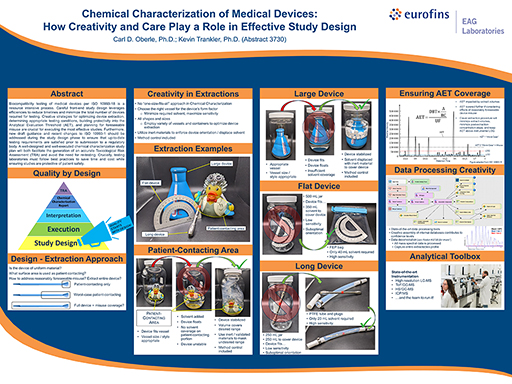
Biocompatibility testing of medical devices per ISO 10993-18 is a resource intensive process. Careful front-end study design leverages efficiencies to reduce timelines and minimize the total number of devices required for testing. Creative strategies for optimizing device extraction, determining appropriate testing conditions, building protectivity into the Analytical Evaluation Threshold (AET), and planning for foreseeable misuse are crucial for executing the most effective studies. Furthermore, new draft guidance and recent changes to ISO 10993-1 should be addressed during the study design phase to ensure that up-to-date testing requirements are satisfied prior to submission to a regulatory body. A well-designed and well-executed chemical characterization study plan will both facilitate the generation of an accurate Toxicological Risk Assessment (TRA) and avoid the need for re-testing. Crucially, testing laboratories must follow best practices to save time and cost while ensuring studies are protective of patient safety.