
Cryo-FIB/SEM: Enhancing Precision and Minimizing Damage in Material Analysis
Cryogenic focused ion beam and scanning electron microscopy is a technique used to reduce damage caused by ion and electron beams.
Home » Using Auger Analysis to Help Prevent Failure of Protective Oxide Layers
As someone who has worn costume jewelry before, I’ve experienced rashes on my skin due to an allergic reaction from the jewelry. I discovered that many inexpensive fashion jewelries contain nickel which can potentially cause skin irritation such as rashes, dry patches or even blisters. A temporary solution to this was to apply a clear nail polish coat to the areas on the jewelry that had prolonged contact with my skin. That did help; however, the layer of polish faded and cracked over time and had to be reapplied. The layer of polish functioned as a protective layer which temporarily served its purpose, to prevent nickel leaching onto my skin.
In this example, my allergic reaction was not serious and was easily treatable. But what can happen in cases where nickel leaches from an implantable medical device? What are the effects? How can that be prevented?
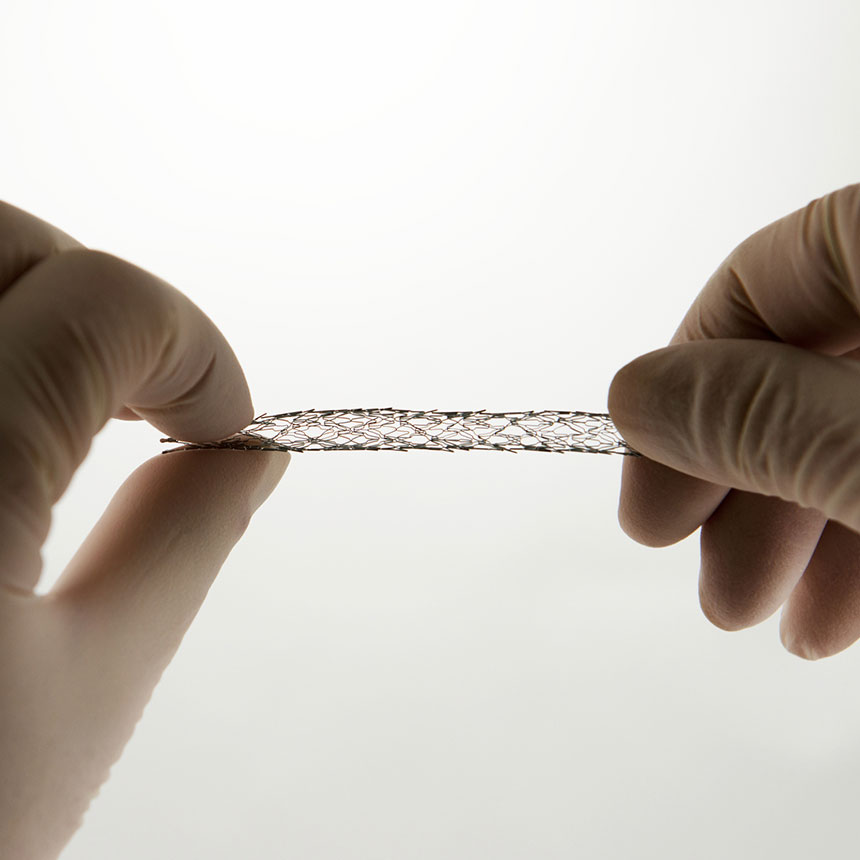
Nitinol is a material that is widely utilized in the medical device industry for implants due to its unique characteristics; however, this nickel-titanium alloy material also poses the risk of exposure to toxic nickel ions. To prevent this, a protective oxide layer is formed on the surface of the device to avoid corrosion resistance and to meet surface passivation criteria. If this protective layer fails, nickel leaching can occur.
Nickel exposure can lead to serious health problems, potentially leading to organ failure. Having a reliable protective layer is a critical step in prevention. Materials testing can provide a deep understanding to support the safety and effectiveness of medical devices.
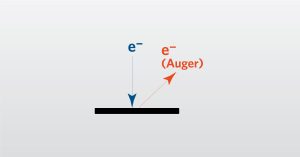
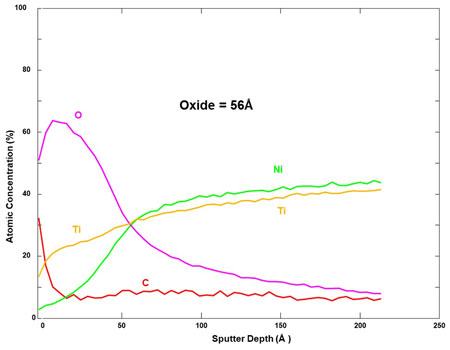
Eurofins EAG brings multi-disciplinary analytical expertise for R&D testing, product development support and root cause failure analysis. We offer Auger Electron Spectroscopy (AES), a powerful tool used for elemental analysis of small surface features. Its ideal application for nitinol testing is to determine the thickness of the protective oxide and its composition. The purpose of the analysis is to ensure that the oxide will protect the nitinol device in the body and prevent flaking of the metal and leaching of nickel.
At Eurofins EAG, our Auger scientists have many years of experience working on various types of materials offering small-area depth profiling, thin film analysis composition, metallurgical analysis, defect analysis and more. Contact us today to learn how we can help you with your next project.

Cryogenic focused ion beam and scanning electron microscopy is a technique used to reduce damage caused by ion and electron beams.

RGA is ideally suited for process development, sealing quality control, studying long-term outgassing of the enclosed materials inside the components, and for product qualification.

The elemental purity of boron carbide can be measured using several methods offered by Eurofins EAG Laboratories
FA plays a critical role in product development and improvement. During this live Ask the Expert event, we will answer pre-submitted questions from our audience about electronic device failure analysis.
To enable certain features and improve your experience with us, this site stores cookies on your computer. Please click Continue to provide your authorization and permanently remove this message.
To find out more, please see our privacy policy.