What Makes Stainless Steel Truly High Performance?

The manufacturing of semiconductors requires high purity and corrosive gases, which are commonly transported by stainless steel products such as tubing, valves, and fittings. Long term exposure to these gases can cause corrosion of the stainless steel parts, leading to contamination of the downstream processing systems. It is therefore important to devise ways to inhibit the corrosion of these products. One such way is electropolishing, a process whereby a surface is electrolytically etched to smooth the surface to improve hydrophobicity and passivate the surface to increase corrosion resistance.

What is electropolishing?

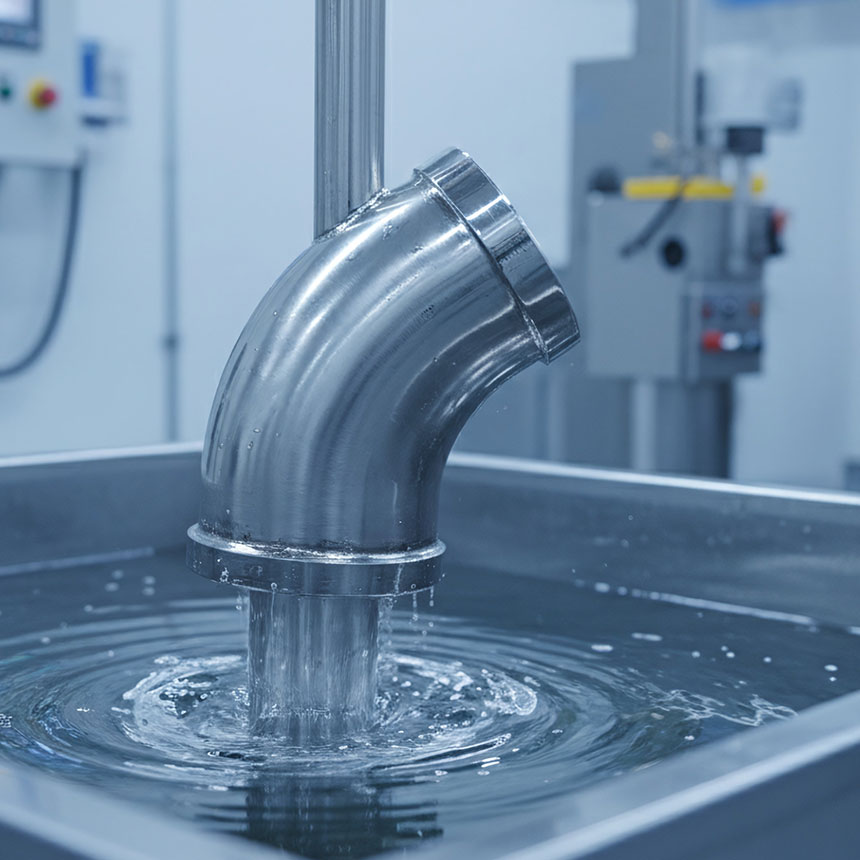
Electropolishing is a process that removes a microscopic layer of material from the surface of stainless steel. Stainless steel may look smooth to the naked eye, but under magnification, even machined or mechanically polished surfaces contain peaks, valleys and micro-crevices that can trap contaminants and create challenges in hygienic and high-performance environments. The electropolishing process removes these surface irregularities, peaks, and embedded contaminants.

electropolished stainless steel

One of the other outcomes of electropolishing is the formation of a chromium-enriched oxide layer on the stainless steel surface. It is believed that during the electropolishing process, Fe is dissolved at a faster rate than Cr, resulting in a surface layer which is Cr-rich. The Cr-rich surface oxide is more chemically resistant than iron oxides. The result is a surface that is not only visibly brighter and smoother but also more corrosion-resistant, easier to clean, and better suited for demanding applications.

Evaluating Electropolished Stainless Steels at Eurofins EAG Laboratories

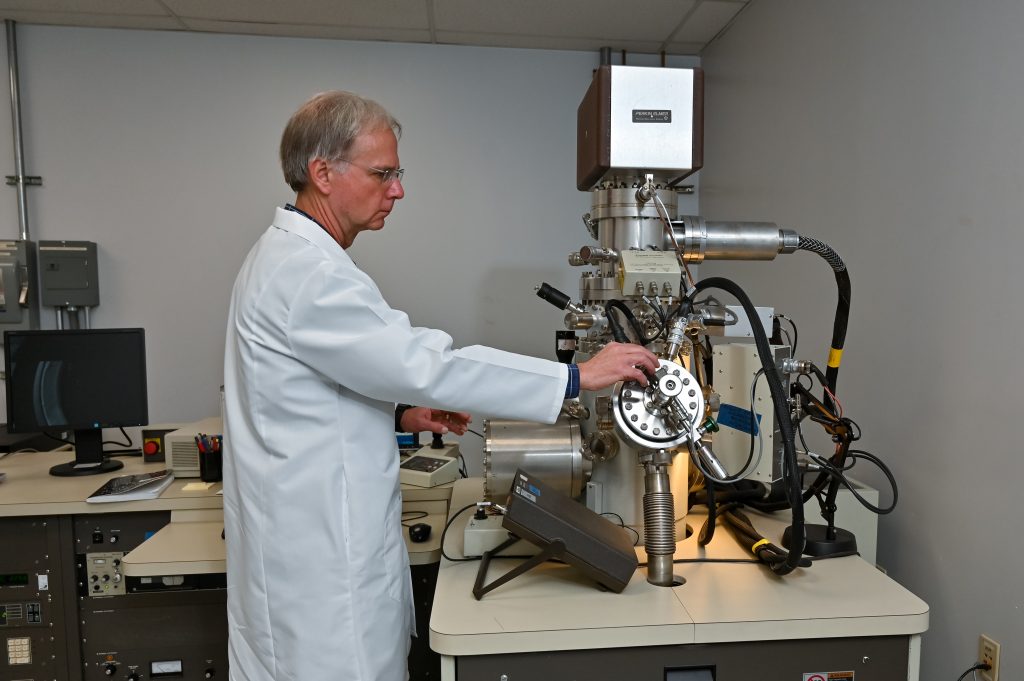
At Eurofins EAG, we have the capabilities and know-how to evaluate the quality of electropolished stainless steels. Advanced analytical techniques are used to ensure surfaces meet stringent industry requirements.

Capabilities include:

  • Surface and bulk elemental analysis
    Measuring composition with high sensitivity to confirm material integrity
  • Near-surface chemistry evaluation (AES, XPS/ESCA)
    Identifying chromium enrichment and chemical states at the surface
  • Oxide layer characterization (AES, XPS/ESCA)
    Measuring oxide thickness, composition, and structure as a function of depth
  • Contamination detection (SEM/EDS)
    Detecting trace contaminants that could impact performance
  • Surface roughness measurement (Stylus profilometry)

The data from these techniques provide a quantitative measurement of how well the electropolishing process was performed and whether the component meets the required specifications.

The numbers from these tests are only part of the picture – the data provides a wealth of additional information if you know what to look for. Eurofins EAG scientists have decades of experience interpreting and explaining complex spectra to offer greater insight, far beyond the specifications. And if needed, EAG also offers dozens of additional analytical techniques to further characterize the products, from the nanoscale to the bulk.

Industries such as semiconductor manufacturing, pharmaceuticals, and advanced gas delivery systems rely on electropolished stainless steel. Eurofins EAG supports these industries by helping clients navigate complex specifications such as SEMASPEC, SEMI, ASME BPE, and other high-purity requirements, ensuring surfaces meet both performance and regulatory expectations. With decades of experience in materials characterization, Eurofins EAG combines electropolishing expertise with advanced analytical capabilities. Contact us today to learn how we can help on your next electropolishing stainless steel qualification project.

More content you might like...

To enable certain features and improve your experience with us, this site stores cookies on your computer. Please click Continue to provide your authorization and permanently remove this message.

To find out more, please see our privacy policy.