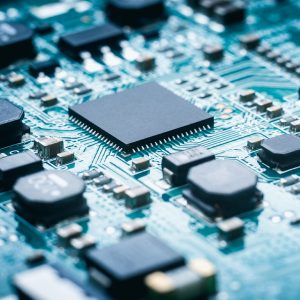
When Images Aren’t Enough – EDS and EELS
EDS and EELS can be coupled with SEM, STEM and TEM to determine the elemental composition, spatial distribution and segregation of elements.

Home » Oleophobic Coatings on Cellphone Screens
Can’t wait to get my hands on my new, shiny, unblemished phone I just picked up at the store. With this new investment, I decided to purchase a screen protector as I’ve done for my previous phones. The protector gives me peace of mind but also provides an added benefit. Have you noticed, with a new screen protector, your fingers tend to glide seamlessly on the smooth screen, barely leaving a smudge or fingerprint? This magic comes from a thin film on the screen protector called an oleophobic coating.
An oleophobic coating is a thin film coating to help prevent fingerprints on a surface. It has properties that reject oil, keeping the screen clean and smudge free. The coating is mainly used on devices with glass such as phones, laptops, touchscreens and more. Unfortunately, oleophobic coatings are fragile and tend to wear down with time and usage. Over time, you’ll notice a difference in the amount of oil left on your protector which can potentially affect the efficiency of how your fingers glide on the surface.
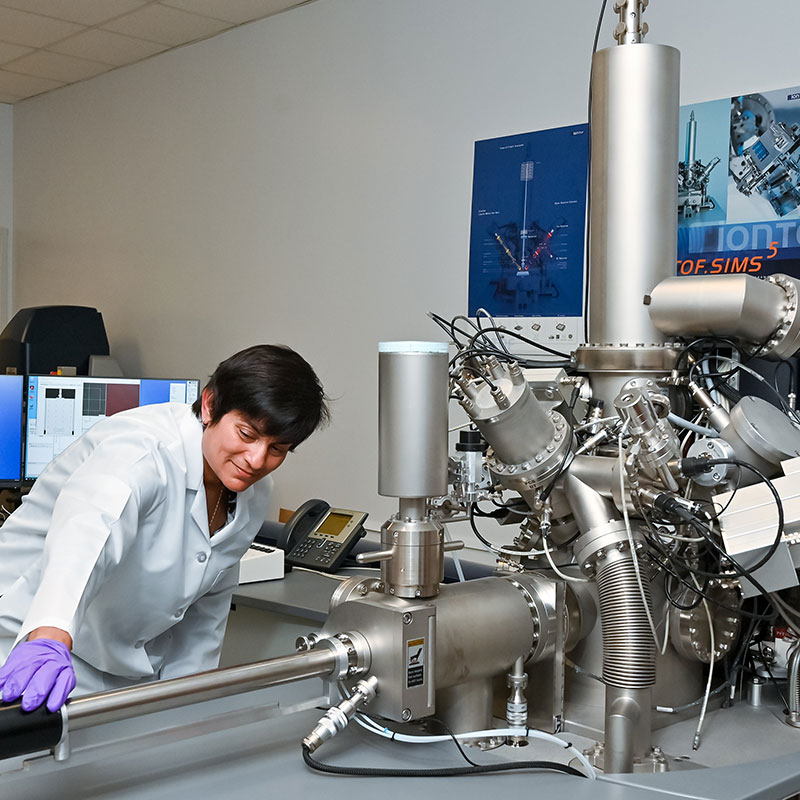
One of our surface analysis techniques, Time-of-Flight Secondary Ion Mass Spectrometry (TOF-SIMS), can be used to characterize the
surface coatings on screens and to compare the thickness of the coatings using depth profiles. In one of our case studies, we compared a new screen protector to a screen protector that had been exposed to UV light for a week. Our data confirmed that UV exposure caused a significant thinning of the oleophobic coating, hence affecting its performance.
Eurofins EAG has unmatched expertise in surface analysis. In addition to TOF-SIMS, other surface analysis techniques offered are Auger Electron Spectroscopy (AES) and X-Ray Photoelectron Spectroscopy (XPS). We can help with your surface analysis needs throughout the product lifecycle, from development to failure analysis. Contact us today to learn how we can help you on your next project.

EDS and EELS can be coupled with SEM, STEM and TEM to determine the elemental composition, spatial distribution and segregation of elements.

RGA is ideally suited for process development, sealing quality control, studying long-term outgassing of the enclosed materials inside the components, and for product qualification.
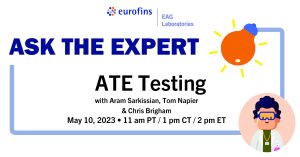
ATE testing automates and streamlines the testing process of microelectronic devices by using specialized hardware and software to perform a wide range of functional tests under various conditions. Come learn more about ATE and what EAG can do for you.

Product liability cases have many complexities and challenges and require top-notch legal services. Navigating the intricate details of these cases requires not only legal insight but also specialized expertise in various technical and regulatory domains.
To enable certain features and improve your experience with us, this site stores cookies on your computer. Please click Continue to provide your authorization and permanently remove this message.
To find out more, please see our privacy policy.