The Vital Role of Destructive Physical Analysis (DPA) in Aerospace and Beyond

DPA, or Destructive Physical Analysis, is a widely used testing method in various industries. It involves carefully taking apart and examining samples or devices to gather detailed information about their physical and material properties. DPA is commonly used in analyzing electronic components, integrated circuits (ICs), and other devices, providing crucial insights into their internal structure for purposes like quality control, failure analysis, and research and development. Physically altering the sample with DPA reveals internal features not visible through non-destructive means. The information obtained through DPA is valuable for understanding the reliability and performance of materials and components, contributing to improvements in the manufacturing processes and the development of high-quality products.

Destructive Physical Analysis (DPA) in the Aerospace Industry

DPA in the aerospace industry is essential for maintaining high levels of reliability, ensuring compliance with standards, conducting thorough quality control, and analyzing failures.

Airplane,Taking,Off,From,The,Airport.,3d,Rendering,And,Illustration.

DPA is commonly utilized within the aerospace industry to qualify electronic components for Class “S”. Increasingly, commercial applications are adopting DPA screening to significantly enhance the reliability of their products in real-world scenarios. This process involves testing and inspecting components in accordance with applicable military standards and design requirements. The demand for higher reliability electronic components arises from the need for extended operational periods with limited opportunities for replacement. DPA is a methodical and detailed examination conducted at various stages of physical disassembly, focusing on identifying design, workmanship, and processing issues that may not be apparent during regular screening tests.here

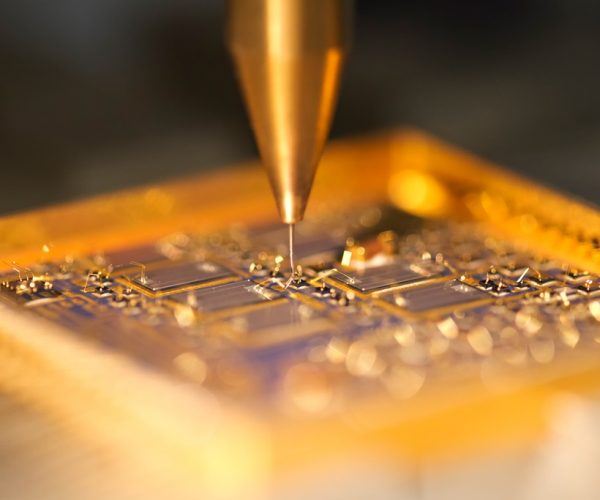
LA-DPA Testing Bond Pull

Destructive Physical Analysis (DPA) At EAG

At EAG Laboratories, we offer DPA Analysis on various parts such as integrated circuits, transistors, diodes, capacitors, resistors, relays, fuses, temperature sensors, filters, crystals, transformers, inductors, coils, RF devices, microwave components, connectors, switches, and hybrids containing multiple components.

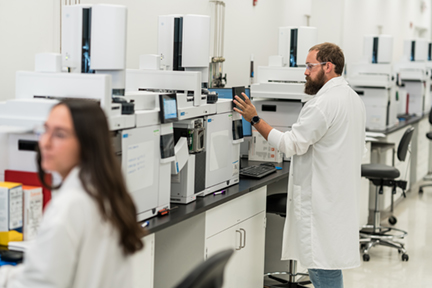
With over 40 years of expertise, EAG has been working with materials utilized across aerospace, commercial, military, and government applications. Our facilities are fully equipped and DLA certified for Residual Gas Analysis/Internal Water Vapor (RGA), Particle Impact Noise Detection (PIND), X-Ray Radiography, and SEM Inspection. We offer a comprehensive suite of testing capabilities, encompassing External Visual Inspection, Hermetic Seal Testing (Fine Leak, Gross Leak), Delid/Decap/Case Removal, Internal Visual Inspection, Bond Pull Strength, Die Shear, SEM Inspection, and Microsectioning. Contact us to learn more.

More content you might like...

Ask the Expert: ESD

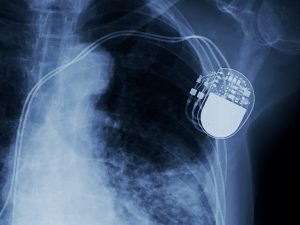
Damage caused by ESD is one of the primary failure mechanisms for integrated circuits. Testing susceptibility to ESD events is crucial in the success of electronic devices and is essential for the qualification process.

Read More »
jade jewelry

Fingerprinting for Phase Identification

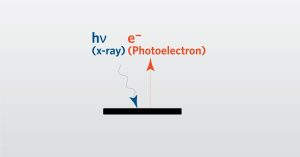
Minerology was one of the earliest fields to benefit from X-ray Diffraction (XRD). Prior to XRD, minerals could only be identified by their external symmetry, shape, and color. XRD transformed mineral identification into an exact science, being perfect for characterizing crystalline materials by their internal structure, not just external appearance.

Read More »

To enable certain features and improve your experience with us, this site stores cookies on your computer. Please click Continue to provide your authorization and permanently remove this message.

To find out more, please see our privacy policy.