Microscopy Techniques in the Failure Analysis of Optoelectronics
EAG divides FA tasks into three levels. In each level, we employ optimal techniques for device characterization, defect localization, and root cause failure analysis.
Home » Polymer Case Study: Blistering Paint
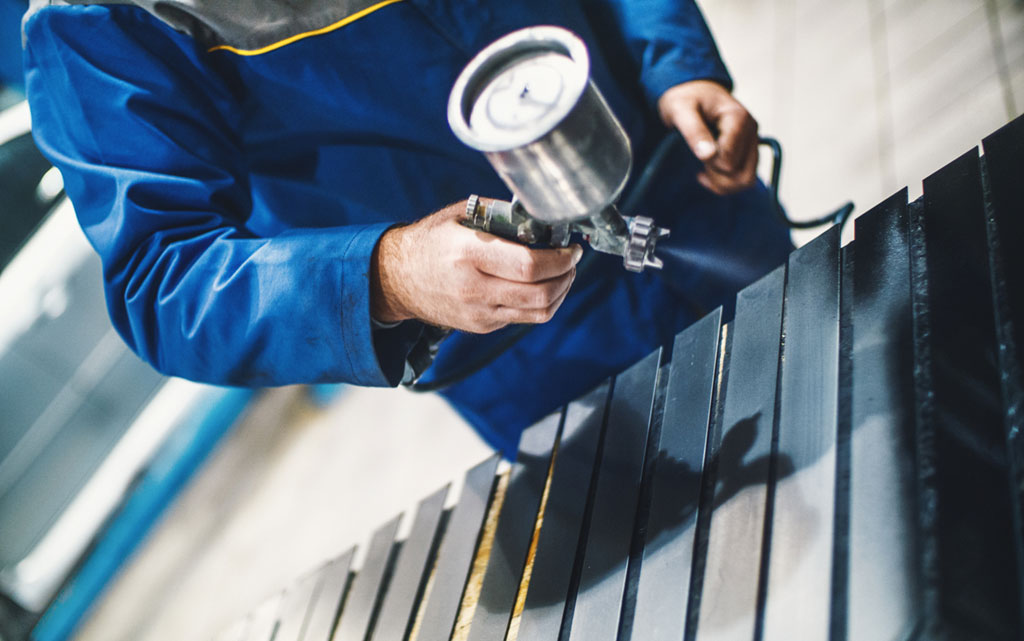
What causes blistering or bubbling within a coating or paint film? These unsightly spots can stem from several factors including moisture entrapment or permeation, contamination, excessive application of coating and more. Blistering paint indicates that the coating is failing, and investigation is needed.
Blisters were observed in paint applied to steel plates that had undergone treatment with a corrosion inhibitor. An investigation was performed to determine if there was evidence of contamination on the inside of the blister.
Paint from a smooth area was removed with a scalpel to serve as a control. A comparison of the elemental profile of the underside of the blister was made with the control paint section. Elements commonly associated with salts (potassium, sodium, and chlorine) were detected by SEM-EDS only on the blistered samples. The blistered area also exhibited a brown color, whereas the control counterpart was green.
The brown coloration and the presence of salts were indicative of corrosion, suggesting the steel surface had not been properly cleaned prior to paint application.
For more than 50 years, scientists and engineers at Eurofins EAG have investigated and resolved product failures for clients. Our team of experts identify key failure indicators and follow them to the root cause.
Failure analysis of plastics, thermosets, and rubber materials is commonly performed on finished products and typically involve comparative analysis between failed and non-failed samples. Once the potential root cause is identified, experiments can be designed and conducted to test the hypothesis and recreate the failure in the laboratory. Eurofins EAG can evaluate a variety of polymer types, including:
Eurofins EAG Laboratories offers a full suite of analytical techniques to evaluate the identity, composition, morphology, topography, and rheology of polymeric materials and components.
Call +1 800-366-3867 or email us.

EAG divides FA tasks into three levels. In each level, we employ optimal techniques for device characterization, defect localization, and root cause failure analysis.

Gallium oxide has the potential to replace or substitute gallium nitride for power conversion in electric trains and vehicles.

Knowing the type of stress and how much there is in a small metal component in a medical device can be the determining factor on how well the device will perform, how long the device will last, or even whether or not the device is going to work at all.

LA-ICP-MS is a technique that uses direct micro-scale sampling to provide high precision elemental characterization of solid materials.
To enable certain features and improve your experience with us, this site stores cookies on your computer. Please click Continue to provide your authorization and permanently remove this message.
To find out more, please see our privacy policy.